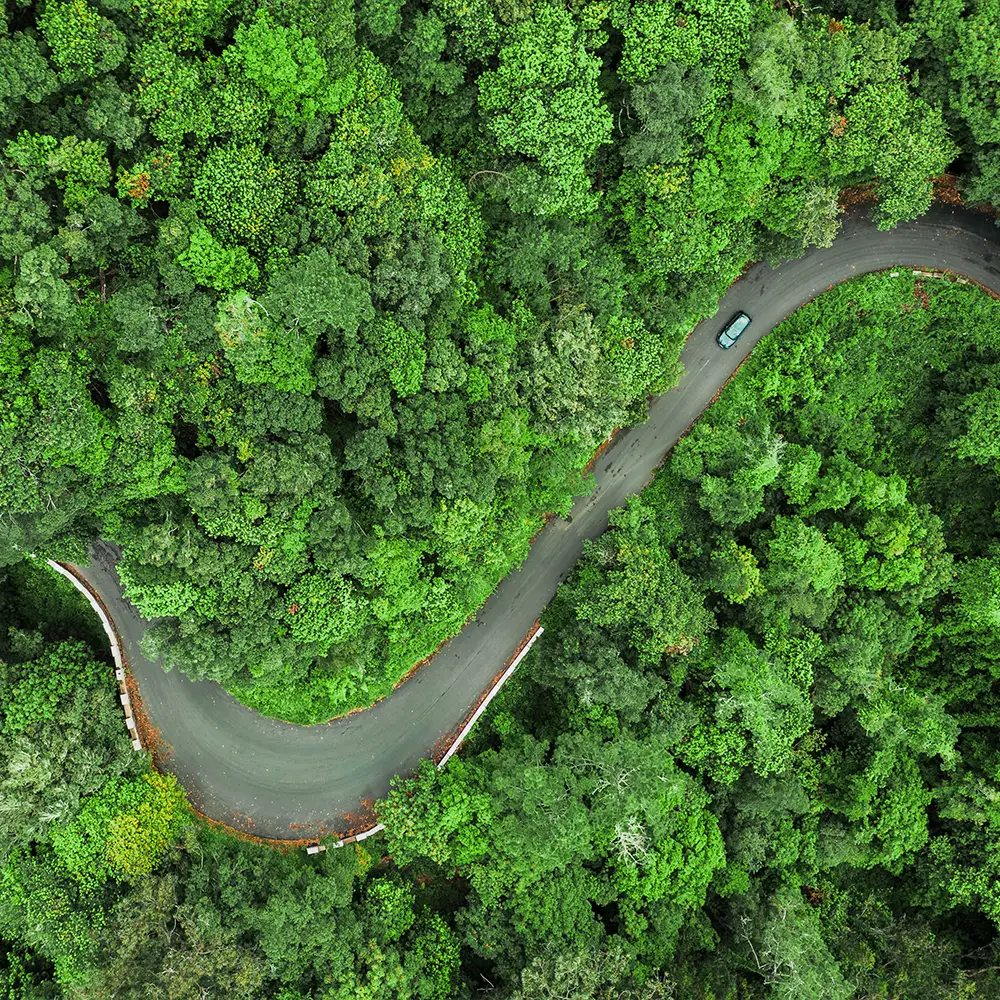
Anyone who visits the Azores immediately notices the green. It’s everywhere. On the hillsides, inside the craters, along the trails, and even on the cliffs that plunge straight into the Atlantic. What many people don’t realise is that a large part of this green is exclusive to the archipelago.
We’re talking about endemic plants. Species that exist only here and nowhere else in the world.
It’s no exaggeration to say that walking along an Azorean trail often feels like walking through a living museum of nature.

For thousands of years, the islands developed in isolation in the middle of the Atlantic. The humid climate, volcanic soils and the absence of large predators created the perfect conditions for the emergence of unique plants, highly adapted to the local environment.
Many of these species are closely linked to the Laurissilva, an ancient, dense and humid forest that acts as a true natural regulator. It captures moisture from the mist, protects the soil from erosion and maintains the balance of ecosystems.
Without this forest, the Azores would not be the Azores.
When thinking about the landscape of the Azores, it is impossible to separate it from the plants that shape it. They are not just a green backdrop. They are an active part of the territory, the climate and the identity of the islands. Many of these species accompany those who walk the trails, climb the volcanic slopes and withstand the constant wind and humidity. They are plants that not only survive here, but visually define what the Azores are.
The Azorean laurel is a constant presence along trails at medium and high altitudes. It is a robust, slow-growing tree that helps retain soil moisture and provides shelter for birds and insects. When walking through a Laurissilva area, it is almost impossible not to come across it.

Known locally as cedro-do-mato, it is perhaps the most iconic plant symbol of the Azores. Resistant to wind, altitude and constant humidity, it shapes mountain landscapes and high plateaus. For centuries it was used in construction, and today it is a protected species.

The Azorean heather forms wide flowering patches that add colour to the slopes and play a fundamental role in the natural regeneration of the forest. It is also an important plant for local pollinators.

Few people ever see it, but those who do never forget it. It grows on coastal cliffs and basaltic rocks, often in places that are almost inaccessible. Rare and delicate, it is a perfect example of how Azorean nature is both fragile and extraordinary at the same time.

These species are not here just to “beautify” the landscape. They are essential for the survival of the archipelago. They protect water sources, prevent landslides, keep soils fertile and support entire ecological chains.
When an endemic plant disappears, there is no possible replacement.
Invasive species, climate change and human pressure are today the greatest threats to native flora. That is why the work carried out by the Azores Natural Park is absolutely essential, from protecting sensitive areas to restoring natural habitats.
Conservation here is not a luxury. It is a necessity.
You don’t need to be a botanist to find it. Just walk. Trails on islands such as São Miguel, Terceira, Flores or São Jorge pass through areas where these plants are part of the natural landscape.
The secret is simple: observe, respect and do not interfere.

The endemic plants of the Azores tell the story of the islands without needing words. They are proof that nature, when given time and space, creates something truly irreplaceable.
Getting to know them is understanding the Azores better. Protecting them is ensuring they continue to exist.